How to Build Your Credit Score in the UK From Scratch
New to the UK with little or no credit history? Learn practical ways to build your UK credit history from scratch, improve your creditworthiness and avoid common mistakes.
Auntie Tobi
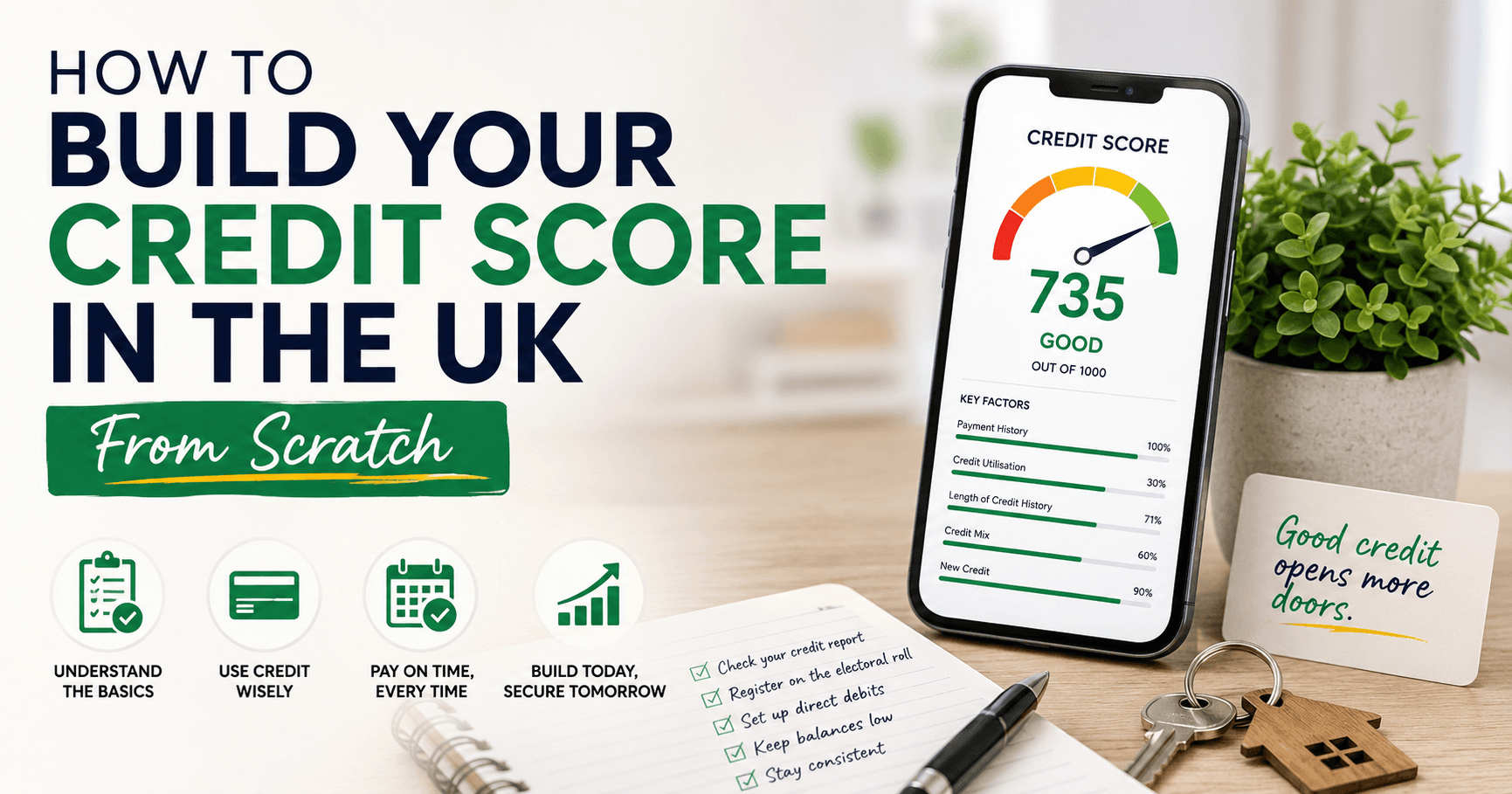
Moving to the UK means starting again in more ways than one and your credit history can be one of them.
You may have had a bank account, credit card, loans or an excellent financial record in Nigeria, but UK lenders will usually assess you using information available to them here.
So you apply for something and suddenly hear:
“You don't have enough credit history.”
Frustrating? Yes.
But having little or no UK credit history doesn't mean you have bad credit. It simply means lenders may have less information available to assess how you manage borrowing.
Here's how to start building it properly.
First: What Is a Credit Score?
A credit score is a number generated by a credit reference agency based on information in your credit report.
In the UK, the three main credit reference agencies are:
Experian
Equifax
TransUnion
One important thing many people don't realise is that there isn't one universal UK credit score.
Each credit reference agency has its own scoring system, and lenders have their own criteria for deciding whether to accept you.
So don't become obsessed with reaching one particular number.
What matters more is developing a strong, accurate credit history that demonstrates responsible financial behaviour.
1. Open a UK Bank Account
If you're starting from scratch, getting a UK current account is a sensible first step.
Use it for your normal finances, such as:
Receiving your salary
Paying household bills
Setting up Direct Debits
Managing regular spending
Keeping your account well managed can help establish your financial footprint in the UK.
💚 Auntie Tobi Tip: You don't need a premium bank account to start building your financial history.
2. Register to Vote If You're Eligible
This one surprises many newcomers.
Credit reference agencies can use electoral register information to help confirm your name and address.
Being registered at your current address can therefore help lenders verify your identity.
However, not everyone living in the UK is eligible to register to vote. Eligibility depends on factors including nationality and immigration status.
If you're eligible, make sure your electoral registration details are accurate.
If you're not eligible, don't panic — you can still build credit in other ways.
3. Make Sure Your Address Is Consistent
This sounds small, but it matters.
Try to use your address consistently across your:
Bank account → bills → credit applications → credit report
For example, avoid unnecessarily using different versions of your address across different accounts.
If you move home, update your address with your financial providers.
Credit providers need to be able to connect your financial information to you correctly.
4. Put Household Bills in Your Name
If appropriate, having regular accounts in your name can help establish your presence at an address.
Depending on the provider and whether they report information to credit reference agencies, this could include certain:
Mobile phone contracts
Broadband accounts
Utility accounts
But don't take out unnecessary contracts simply to “build credit”.
The objective is to create a healthy financial history, not collect bills.
5. Consider a Credit Card But Only If You Can Manage It
Once you're eligible, a credit card can be one way to demonstrate responsible borrowing.
If you're new to credit, you may find that some mainstream cards aren't available to you yet. Some providers offer cards specifically aimed at people building or rebuilding their credit history.
But here's the important part:
A credit card isn't free money.
If you get one, consider using it for a small amount of spending you would have made anyway.
For example:
You spend £40 on groceries using the card.
Then you pay the balance according to the card's terms ideally in full and on time so you don't unnecessarily pay interest.
Over time, responsible use can contribute to your credit history.
6. Set Up Direct Debits for Payments
One of the easiest ways to damage your credit history is simply forgetting a payment.
Where appropriate, set up a Direct Debit to ensure required payments are made on time.
For credit cards, you may be able to set a Direct Debit to pay:
The minimum payment
A fixed amount
The full statement balance
Paying the full statement balance each month can generally help you avoid interest on ordinary purchases, subject to your card's terms.
💚 Auntie Tobi Says: Don't borrow money just to prove that you can repay borrowed money.
7. Pay Everything on Time
This is one of the most important habits to develop.
Late or missed payments can appear on your credit report and may make future borrowing more difficult.
This can potentially affect applications for things such as:
🏠 Mortgages
🚗 Car finance
💳 Credit cards
📱 Phone contracts
💷 Personal loans
If you're struggling to make a payment, don't simply ignore it. Contact the provider as early as possible to discuss your options.
8. Don't Apply for Too Much Credit at Once
You arrive in the UK and suddenly you want:
A new phone.
A credit card.
Car finance.
Furniture finance.
A store card.
And perhaps another credit card.
Slow down. 😄
When you formally apply for credit, a lender may perform a hard credit search.
Multiple applications within a short period can make lenders more cautious.
Instead, check your eligibility first where providers offer a soft-search eligibility checker.
Soft searches generally don't affect your credit score in the way hard credit applications can.
9. Keep Your Credit Utilisation Sensible
Suppose your credit card has a £1,000 limit.
Regularly having £950 outstanding means you're using a very high proportion of your available credit.
Even if you haven't exceeded the limit, consistently using most of your available credit can potentially make you appear more financially stretched to lenders.
There's no magic utilisation percentage that guarantees approval, but keeping balances manageable and avoiding maxing out cards is sensible.
And don't increase your spending just because your credit limit increases.
10. Check Your Credit Reports
Don't wait until you're applying for a mortgage to discover there's an error on your credit file.
Check your reports periodically.
Look for:
Incorrect addresses
Accounts you don't recognise
Payments incorrectly shown as late
Old financial connections
Duplicate accounts
Incorrect personal information
Because the three main agencies may hold different information, it can be useful to check all three.
If something is wrong, contact the relevant credit reference agency or organisation that supplied the information and ask for it to be investigated.
11. Be Careful With Buy Now, Pay Later
That £20 purchase can feel harmless when the button says:
“Pay later.”
But Buy Now, Pay Later is still a form of borrowing.
Depending on the product and provider, information about your borrowing and repayment behaviour may be shared with credit reference agencies.
Don't use BNPL simply because it's available.
Ask yourself:
“If I had to pay for this today, could I comfortably afford it?”
If the answer is no, think carefully before turning today's purchase into tomorrow's bill.
12. Don't Take Out Loans Just to Build Credit
This is worth saying clearly.
You do not need to pay unnecessary interest just to build a credit history.
Taking a loan you don't need can cost you money and create an unnecessary financial commitment.
Focus instead on:
Consistency + affordability + paying on time + keeping your information accurate.
How Long Does Building Credit Take?
There isn't a universal number of months after which everyone suddenly gets a “good” credit score.
Your credit history develops over time.
Lenders may consider many factors beyond the score displayed in an app, including:
Your income
Existing debts
Repayment history
Available credit
Affordability
Length of credit history
Information on your credit report
Their own lending criteria
That's why two people with apparently similar credit scores can apply for the same product and receive different decisions.
New to the UK? Avoid These Credit Mistakes
❌ Applying for several credit cards at once
❌ Missing payments
❌ Maxing out credit cards
❌ Borrowing simply to improve your score
❌ Ignoring errors on your credit report
❌ Assuming a higher credit limit means you should spend more
❌ Using BNPL without tracking repayments
❌ Paying companies promising to magically “fix” your credit score
Building credit isn't about looking rich.
It's about demonstrating consistent and responsible financial behaviour.
A Simple Credit-Building Plan for Someone New to the UK
Month 1:
Open and properly manage your UK current account. Make sure your name and address are consistent.
Month 2:
Register to vote if eligible and check your credit reports.
Months 2–3:
Build a history of paying genuine household and mobile bills on time.
Later:
If appropriate and affordable, consider a suitable credit product after checking your eligibility.
Ongoing:
Pay on time, avoid unnecessary applications, check your reports and keep borrowing manageable.
There is no need to rush.
💚 Auntie Tobi Says
When you're new to the UK, it can feel like everybody else already understands the system.
They don't. 😄
And you don't need to go into debt just to build a credit score.
Start small. Pay on time. Keep your records accurate. Don't borrow what you cannot comfortably repay. And give your credit history time to grow.
Your goal isn't simply to achieve a beautiful number on a credit app.
Your goal is to build a healthy financial profile that can help you when you genuinely need access to credit in the future.
Send this to someone who recently moved to the UK.
Official & Useful Resources
For current guidance, check the MoneyHelper website, the government’s Register to Vote service, and your credit reports with Experian UK, Equifax UK and TransUnion UK.
This article provides general information and is not personalised financial advice.


Comments(0)